Short answer
Once it's safe, walk around the house and photograph the roof from every side. Look for missing shingles, lifted ridge caps, damaged soffit, fallen limbs and dents, then check the attic and ceilings for water. Tarp any openings quickly, notify your insurer and schedule an inspection.
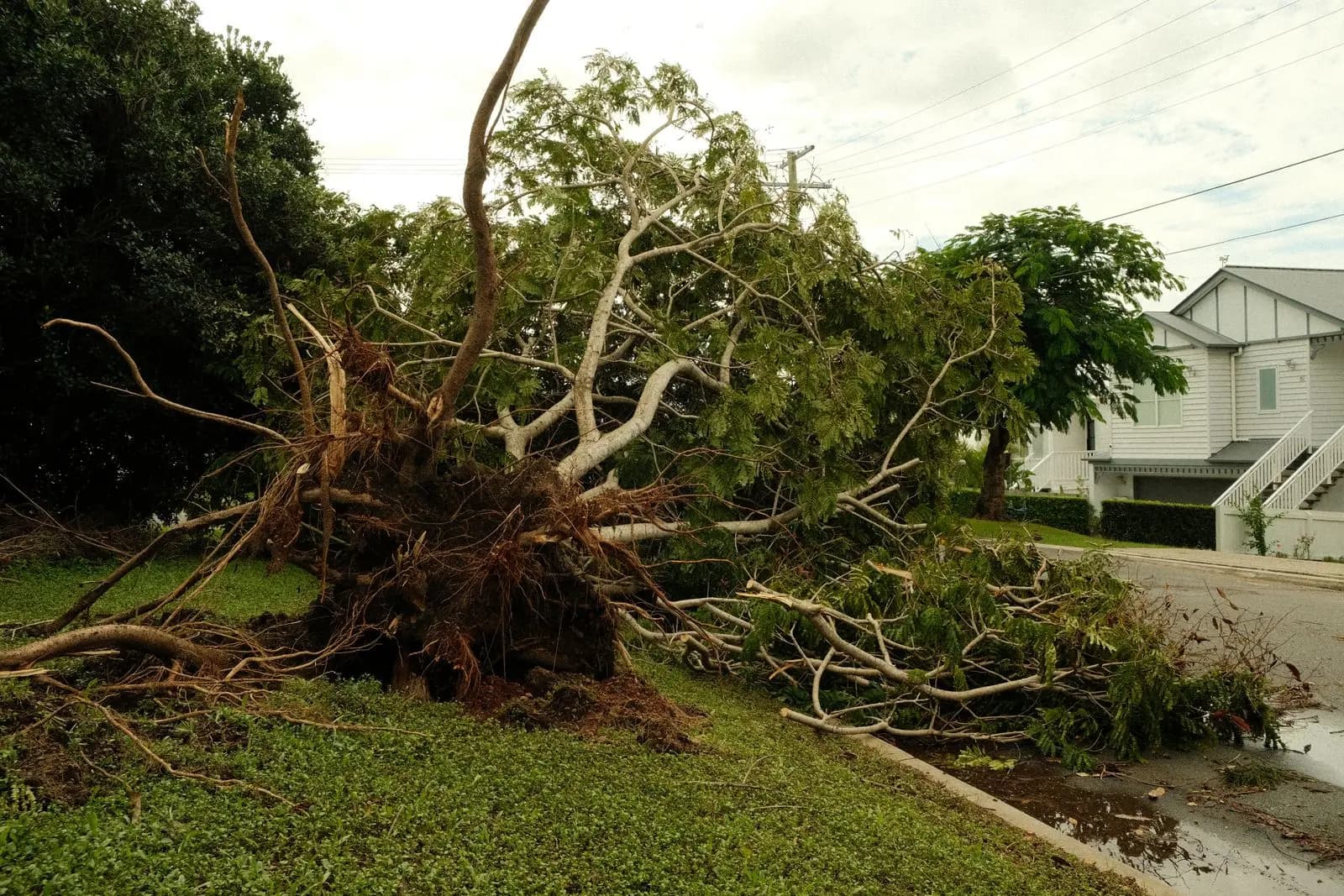
Safety first
Injuries from falls, chainsaws, generators and downed lines are common after big storms.
- Stay off the roof. Wet, damaged roofs are slippery and may not hold weight.
- Treat every downed line as live and report it to your utility.
- If a tree is on the house, stay out of the rooms below it.
- Run generators outside, far from windows and doors.
From the ground
- Missing or folded-back shingles, especially along the eaves, rakes and ridge.
- Exposed underlayment or bare decking.
- Loose or missing ridge caps, vents and flashing.
- Soffit panels pulled out, fascia hanging, gutters pulled away.
- Limbs resting on the roof or debris in the valleys.
Inside
Check upstairs ceilings, closets and around light fixtures for stains. With a flashlight, look in the attic for daylight, wet decking and soaked insulation. If the power is out, a closed-up house can grow mold fast, so get wet materials drying.
Document, cover, report
Photograph everything before cleanup, including debris in the yard. Get openings tarped, keep receipts, and notify your insurer as soon as you can. After big storms roofers are booked solid, so getting on the list early matters.
Watch for storm chasers
After every major storm, out-of-town crews go door to door. Ask for a local address, a certificate of insurance and any license or registration your state requires. Don't sign on the spot, never pay in full upfront, and walk away from anyone offering to cover your deductible.
When to call a roofer
- Any part of the roof deck is exposed.
- Water is coming in, or ceilings are stained after the storm.
- A tree or large limb is on the roof.
What the roofer does: see hurricane & wind damage repair.
Common questions
How soon after a hurricane should my roof be inspected?
As soon as it's safe and a roofer is available. Tarp openings right away to prevent further damage.
Does a hurricane deductible apply?
Many policies in coastal states apply a separate hurricane, named-storm or wind deductible, often a percentage of dwelling coverage. Check your declarations page.
Editorial note: this guide is general information for homeowners, not a diagnosis or insurance advice. Conditions vary by roof, so a roofer should inspect and confirm the cause before any repair.