Flat & Low-Slope Roofs
Flat and low-slope roof repair
Flat and low-slope roofs need membranes, not shingles: modified bitumen, EPDM rubber, TPO or similar systems. Most failures come from ponding water, open seams and flashing at walls. A roofer repairs seams and flashing, or replaces the membrane with better drainage.
- Same-day inspections when a roofer is available
- All 50 states + D.C.
- Quote before work
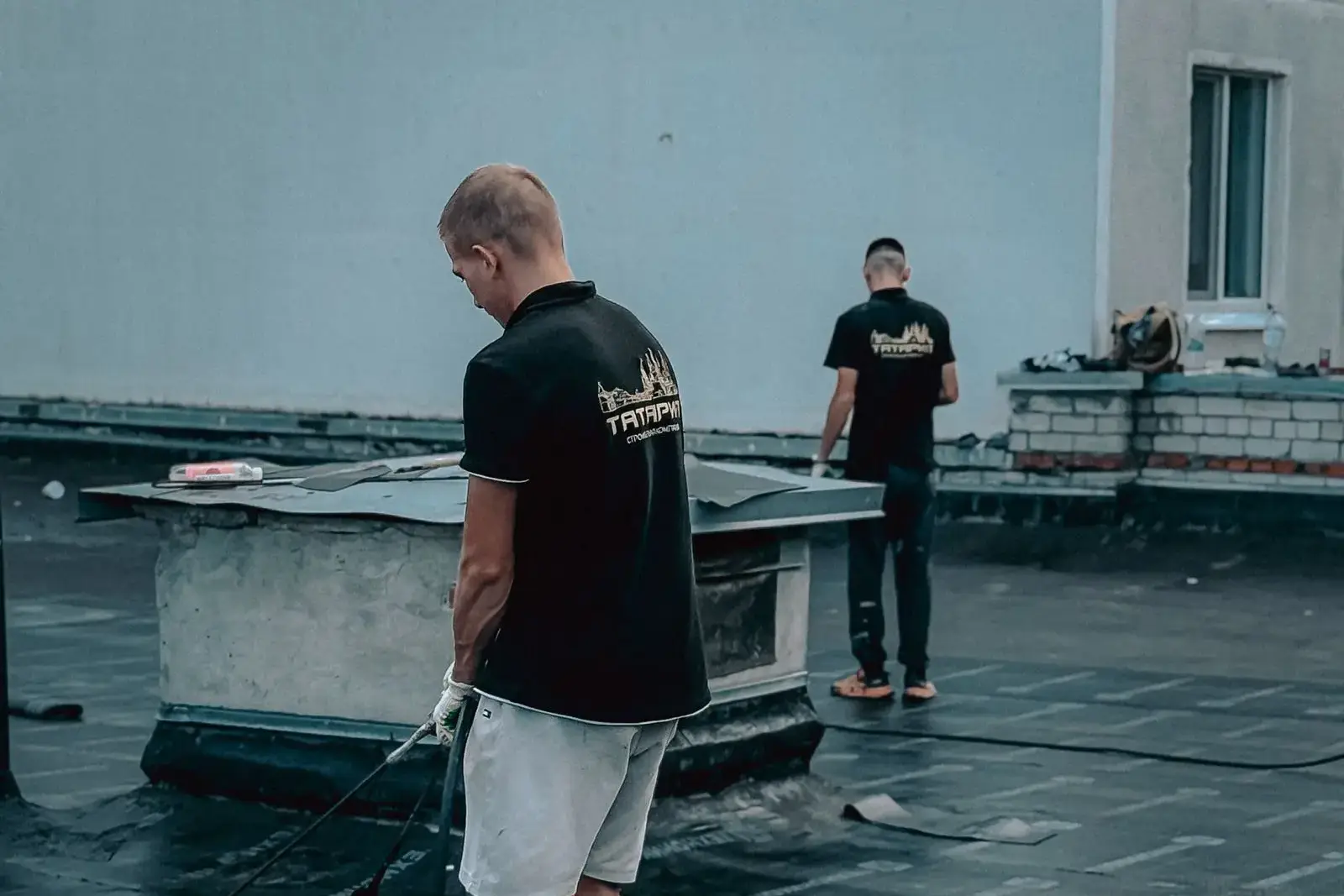
Flat sections show up everywhere: rowhouses in Philadelphia, Baltimore and Washington, triple-deckers in New England, mid-century modern homes, porches, garage additions and patio covers. Shingles can't be used below a 2:12 pitch, so these areas need a membrane.
Water that sits for more than 48 hours after rain, called ponding, breaks down membranes and finds every weak seam. In cold climates, freezing ponded water adds stress. Fixing the slope or adding a scupper often matters more than the patch.
Flat roofs at a glance
- Systems
- Modified bitumen, EPDM and TPO
- Below 2:12
- A membrane is required, not shingles
- Watch for
- Ponding longer than 48 hours
- Common on
- Rowhouses, porches, additions and patio covers
Types of flat roofs
Signs you need flat roofs
- Water standing two days after rain
- Blisters, cracks or alligatoring in the surface
- Open seams or lifted edges
- Leaks where a flat section meets a wall or the main roof
- Soft spots underfoot
How the roofer handles it
- 1
Inspect
Seams, flashing, drains and scuppers are checked, and wet insulation is located if there is any.
- 2
Fix drainage
Tapered insulation, crickets or added scuppers move water off the roof.
- 3
Repair or replace
Seams and flashing are repaired, or the membrane is replaced with modified bitumen, EPDM or TPO.
- 4
Detail transitions
Wall and roof-to-roof transitions get counterflashing and termination bars.
What affects the cost
Prices depend on what the roofer finds, so the contractor quotes after inspecting. These are the main factors:
- Membrane type and thickness
- Wet insulation or decking to replace
- Drainage corrections
- Access on rowhouses and rooftop decks
- Number of penetrations and walls
What you can do, and when to stop
Safe to do yourself
- Keep drains and scuppers clear of leaves
- Photograph ponding after storms
- Note where leaks show inside
Call a roofer
- Patching with roofing tar over a wet membrane
- Walking on soft or blistered areas
- Using a torch near wood or siding
Frequently asked questions
How long does a flat roof last?
Modified bitumen, EPDM and TPO typically last about 15 to 30 years with good drainage and maintenance.
Is ponding water a problem?
Water that clears within 48 hours is usually acceptable. Longer ponding shortens membrane life and should be corrected.
Which membrane is best?
It depends on the roof and climate. TPO reflects heat and suits sunny areas, EPDM is durable and flexible in cold, and modified bitumen is common on residential flat roofs.
Flat roofs by state
Related services
Need flat roofs?
Same-day inspections when a roofer is available. One call connects you with an independent roofer who serves your ZIP.